
Accordion Awareness Month History and Cultural Importance
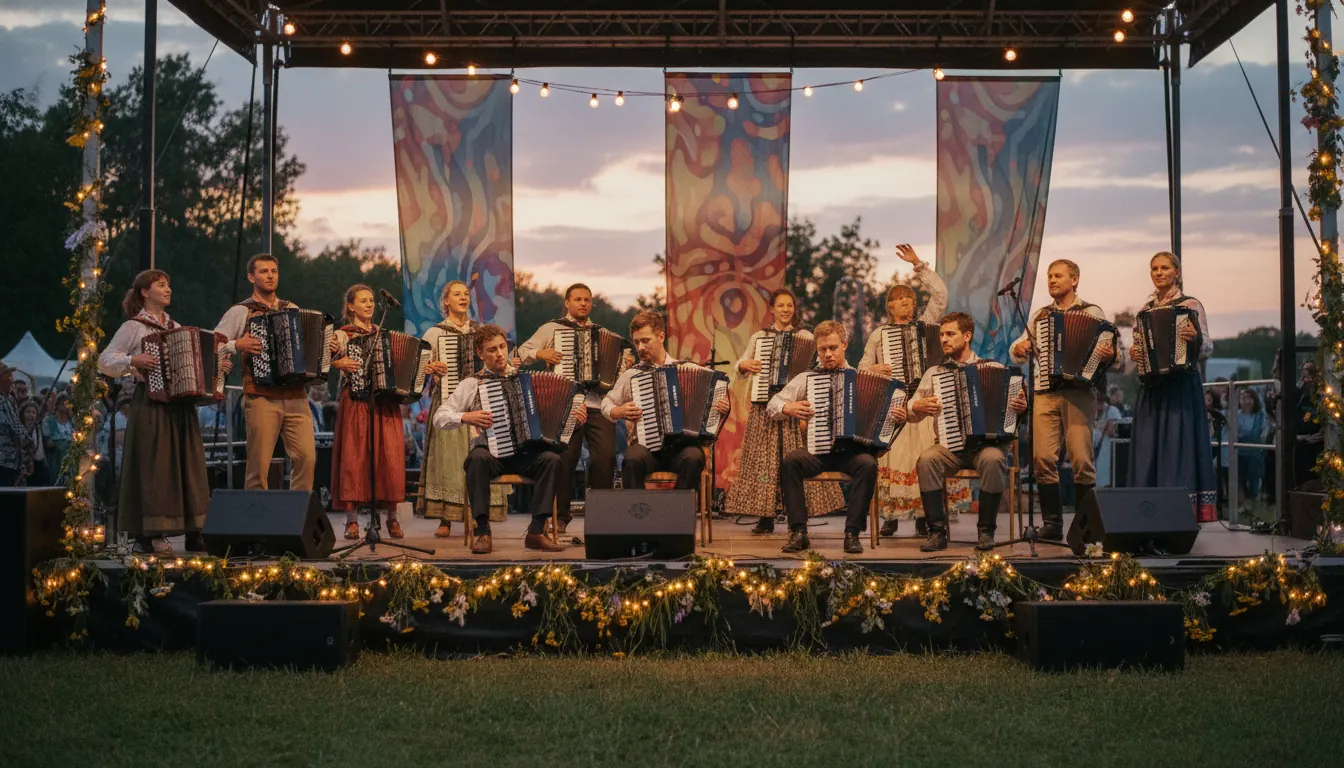
National Accordion Awareness Month, celebrated every June since the 1990s, represents one of the most successful musical instrument advocacy campaigns in American history. Founded by Tom Torriglia after recognizing the accordion's image problem in popular culture, NAAM has fundamentally transformed public perception. What began as modest local celebrations in San Francisco has grown into an international movement with events spanning North America, Europe, and beyond. The initiative demonstrates how dedicated advocacy combined with strategic media engagement can rehabilitate a cultural artifact dismissed as novelty or punchline, restoring it to respected status within both classical and popular music contexts.
Origins and Early Development
Torriglia conceived National Accordion Awareness Month in response to the instrument's marginalization in American popular culture. Throughout the 1980s, accordions appeared primarily as comedy props or polka music stereotypes. Serious musicians faced dismissive attitudes from venue operators, music educators, and media gatekeepers. Torriglia recognized that changing this perception required coordinated effort beyond individual performances. By establishing a dedicated awareness month, he created an annual platform for accordion advocates to showcase the instrument's versatility, historical significance, and contemporary relevance through concerts, workshops, media features, and educational programming.
- Initial celebrations focused on San Francisco's Italian-American community before expanding nationally
- Early media coverage in People Magazine and The New York Times provided crucial mainstream validation
- Music schools began incorporating accordion workshops and demonstrations during June awareness activities
- International accordion organizations adopted similar awareness campaigns in their respective countries
- Social media amplification in recent years has exponentially increased NAAM's reach and engagement
Key Milestones and Growth Metrics
Tracking NAAM's evolution reveals steady growth in participation, media coverage, and cultural impact over three decades:
| Decade | Participation Level | Media Coverage |
|---|---|---|
| 1990s | Regional (Bay Area focused) | Local newspapers, music magazines |
| 2000s | National (major US cities) | National publications, TV features |
| 2010s | International (20+ countries) | Social media virality, streaming events |
| 2020s | Digital expansion | Virtual concerts, online education platforms |
"National Accordion Awareness Month transformed the accordion from punchline to respected musical voice—proving that cultural perception can be changed through consistent, strategic advocacy."
Educational and Cultural Significance
Beyond entertainment, NAAM serves crucial educational functions. Schools use June as opportunity to introduce students to accordion history, mechanics, and diverse musical traditions associated with the instrument. Museums and cultural centers mount special exhibitions featuring vintage accordions and documenting their role in immigrant communities. Music therapy programs highlight the accordion's accessibility and therapeutic applications. Academic conferences examine the instrument's cultural significance across different ethnic traditions. These educational dimensions ensure NAAM impacts not just active musicians but broader public understanding of musical diversity and cultural preservation. The awareness month thus functions as both celebration and comprehensive educational campaign reaching multiple audiences through varied channels.